
Blog entry by Astrid Dinneen
Anyone in the world
By the Hampshire EMTAS Specialist Teacher Advisors with the support of the wider EMTAS team

It has been another busy year for Hampshire EMTAS. In this article we examine this academic year’s data and share interesting trends - these trends are reflected in our staffing update as well as the BCAP and B-ELSA role sections. We reflect on our work with Separated Minors (aka Unaccompanied Asylum-Seeking Children) and share highlights of our support to pupils from Traveller and Showmen heritages. We celebrate the end of the GCSEs, catch up with our new study skills programme and reveal the schools who have successfully achieved their EAL/Traveller Excellence Award. Next, there is an update on our research project with the University of Reading. You will see we also ask for your input to help us shape next term’s programme of network meetings. We finish with a note from Team Leader Dr Sarah Coles.
This academic year in data
Our referrals this year total a little over 1,000. The most referred language this time has been Malayalam, reflecting families coming new to Hampshire from Southern India. Also featuring in our data are various African languages; Isizulu, Ndebele, Twi, Igbo, Swahili, Somali, Hausa, Mandinka and Afrikaans. For each of these, we've had relatively low numbers referred. However, when combined they’ve added up to enough for us to have needed to increase our staffing for this diverse group of children. Although not at the same rate as in recent years, we’ve also continued to receive lots of referrals for children here with their families as refugees. They represent speakers of an array of languages and they originate from countries across the globe – Afghanistan, Iran, Iraq, Somalia, Pakistan and Ukraine to name a few. So it's been all hands to the pump as EMTAS staff have worked to profile all the children, and to support them in the way that best matches the needs of the individual.
EMTAS staffing update
New to the EMTAS Bilingual Assistant team this year we have
welcomed Nyonde, who works with Fiona C to support black children on roll in
our schools. Lubna adds Urdu to the languages we can cover, Katya joins our
Ukrainian team this summer term and in September, Anu brings Malayalam and
Tamil to our offer to schools. Replacing Jess, who left for a new life in
America at Christmas, Michelle joined the teacher team in the summer term and
has been building relationships with staff in schools in Fareham and Gosport,
her new patch, ever since. Thibaut will join our teacher team in September;
he’ll be covering schools in the New Forest.
We say farewell to Kevin, who joined us just for 1 academic year to help cover our Cantonese referrals. Kevin goes on to a support role in a school. Sudhir is leaving us too. He’s been a member of the BA team for 16 years, and is well-known in schools with Nepali children on roll. Sudhir is off to train to be a maths teacher and we wish him every success in that endeavour. Finally, we congratulate Team Leader Dr Sarah Coles on successfully completing her PhD.
BCAP
This year we are delighted to welcome a new Achievement Project
Officer for children of black and ethnic minority heritage. The team consists
of two people who are covering the whole county mainly supporting children of
colour. We have had a significant increase in the number of referrals from
schools for children who speak African languages, the main ones appearing on
referrals being Shona, Yoruba, Ndebele and Twi. Our Achievement Project Officers
can now offer Cultural Awareness training to schools in addition to their
support for these pupils.
Bilingual ELSA (B-ELSA)
Using funding for children from Ukraine, EMTAS and HIEP have
worked together to develop a new role, the Bilingual ELSA. Our Bilingual ELSAs
receive the same training and supervision with an Educational Psychologist as a
school-based ELSA. The Bilingual ELSAs work together with school-based ELSAs to
plan, deliver and review ELSA sessions tailored to children from Ukraine. In
this way, school-based ELSAs stay fully informed about the Ukrainian children’s
emotional well-being whilst the children will always have access to someone in
school who understands how they are feeling and the issues they are dealing
with like the loss of their home in Ukraine, bereavement, separation from
family members and friends, loss of power and control over key aspects of their
daily lives and uncertainty.
Bilingual ELSAs offer children a real connection to home as they give an opportunity to speak in first language as well as English. Our B-ELSA team share resources with school-based ELSAs and bring in other materials too, eg from Bear us in Mind. This charity provides, amongst other things, teddy bears in the colours of the Ukrainian flag. A bear attends each B-ELSA session, offering children a tangible anchor of emotional comfort.
Separated Children
You will have noticed we now refer to Unaccompanied Asylum-Seeking Children (UASC) as ‘separated children’, as this better describes the ongoing experience of separation they face. According to government statistics there were 3,285 applications from separated children in the year ending March 2024, 5% of the total asylum applications to the UK.
The separated children we have met at EMTAS have mostly come from Afghanistan, Iran, Iraq and Sudan and the most common languages have been Pashto, Arabic and Kurdish Sorani. Some of these children have been attending schools in Hampshire and the Isle of Wight, but we have also been continuing our work with the Virtual School to provide profiling assessments for separated children under Hampshire who have been placed in other counties. We have had 27 separated children referred to EMTAS since September 2023.
These children have to learn to deal with a new language, a new school system, a new home and a new culture, without family and friends to support them. Some cope with this change incredibly well, whilst others feel out of place and find the lessons overwhelming and the restrictions of school life in the UK very difficult to adjust to. If one of these brave young people arrives at your school, please do get in contact with EMTAS as soon as possible so that we can work together to support them as they learn to adjust to their new life. For more information and guidance on separated children, see our Moodle folder Asylum Seekers and Refugees. Try this quiz too, to see how much you really know about refugees: Refugee Action quiz (refugee-action.org.uk).
Traveller & Showmen work
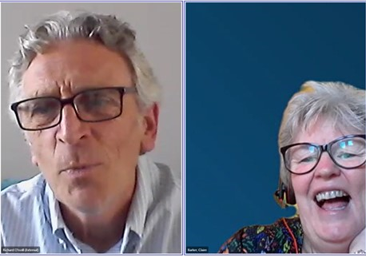
As usual the Traveller team have been busy throughout the year supporting all our schools, families and children. Julie and Steve, our two Traveller Support Workers (TSWs), have been in schools visiting all our primary aged children whilst Claire, our Traveller Team lead, has been supporting students in secondary schools via our Traveller & Showmen clinics. This is no mean feat when you consider that we are currently supporting 325 children. During this academic year Helen, our Traveller Team Teacher, has made 28 school applications to help Traveller & Showmen pupils to get places in Hampshire schools.
As well as continuing with our Traveller & Showmen book and gardening clubs, we have also been running an attendance project. Claire and Helen have been working with four schools and their families to support increased attendance. Next year we are hoping to extend the project to include more schools.
To celebrate Gypsy, Roma and Traveller History Month we were very privileged to be able to provide two live, online story-telling sessions with author Richard O’Neill. We were joined by lots of our schools and hundreds of children were able to enjoy Richard’s wonderful stories. We also held a poetry competition around the month’s official theme ‘What does family mean to you?’. We encouraged our pupils to write a poem entitled ‘What family means to me’. We have had some fantastic entries and Claire and Helen will be getting together soon to decide who will win a signed Richard O’Neill book.
Heritage Language GCSEs
This has been a bumper year for EMTAS with the Heritage Language GCSEs. 200 applications were made by 11 schools and 187 students were supported by EMTAS Bilingual Assistants in the speaking exam, whilst 70 students had support for reading and writing too. It is great to see so many schools celebrating multilingualism by offering Heritage Language GCSEs to their students. Polish was the most requested language with the largest number of candidates sitting the exam; our Polish Bilingual Assistants supported 38 students at one school alone. All our Bilingual Assistants supporting Heritage Language GCSEs have been racing from school to school to carry out the speaking exams within the assessment window. We are looking forward to results day on 22 August when we hope the students will be celebrating their achievements. Our staff are looking forward to hearing how well their students did too.
Study Skills Programme
This academic year our Bilingual Assistants have been providing support to pupils through the Study Skills Programme, a new and innovative form of support for pupils in Years 5 and 6 and KS3/4 who are literate in their first language. The aims of the programme are to help pupils explore how they feel about their learning and their subjects and to equip them with different tools and strategies they can apply in their lessons and home learning. For example, pupils have been learning how to use Google Lens to create a glossary, had a go at using Immersive Reader to access a text and much more. After an initial pilot at the start of the academic year the programme is now part and parcel of our ways of working with pupils.
Feedback from the programme has been overwhelmingly positive. One Bilingual Assistant fed back that throughout the sessions, her pupil displayed a strong interest in the programme and seemed determined to learn about the tools and skills introduced to support her learning. Another pupil said that she found Microsoft Translator and Immersive Reader especially useful for her revision practice. She was already familiar with some of the tools but commented that it was useful for her to explore these further and discover new features that she had not been aware of.
It is hoped that the impact of the programme will be apparent in class long after the pupils have completed the programme. In order to maximise impact and help pupils continue to develop independence in the classroom, the use of translation tools will need to be woven through teacher planning. To enable them to do this effectively, there will be opportunities for colleagues to learn more about the technology built into the Study Skills Programme in the new academic year.
EAL and Traveller Excellence Award celebrations
This academic year, we have once again celebrated the hard work of many Hampshire schools, and others further afield, who have achieved an EAL or Traveller Excellence Award.
Achieving the bronze level Traveller Excellence Award this year was Micheldever Primary school. Silver was awarded to Robert May’s School. We keep everything crossed for Greenfields Junior school, Wellow Primary school and The Hurst for their upcoming validations at bronze level.
Achieving the bronze level EAL Excellence Award were the City of Leicester College and New Milton Junior school. Silver level was awarded to Purbrook Infant school, St Peter’s Junior school, St Michael’s Infant school and Fleet Infants. Achieving the gold level award were Swanmore College, Alderwood Senior school, Alderwood Infants and Junior school, Elvetham Heath Primary school, The Riccher Federation Nursery Schools, The Wavell and Al Rabeeh Academy. Congratulations to all these schools and settings on this fantastic achievement!
This year we have introduced two new elements within our EAL awards. We have developed an Early Years Foundation Stage EAL Excellence award which we have already been successfully using to validate some nurseries and pre-schools during its pilot phase. In addition to this, we have now included a Diamond level within our EAL award. For schools that have successfully been validated at gold level twice, they can begin working towards their Diamond level. More information regarding this exciting addition can be found here: Working beyond Gold – introducing the new EMTAS Diamond EAL Excellence Award (hants.gov.uk).
University of Reading and EMTAS research project
Our joint research project with the University of Reading has got off to a great start. Naomi Flynn has held interviews with the EAL or GRT co-ordinators and Headteachers of fourteen schools from across the county. These have been very helpful in establishing what schools currently do to support their multilingual, Traveller and Showmen pupils, what they find challenging, and what they would like to see in the new oracy-related training materials that will emerge from this project. Alongside the interviews, Naomi has been meeting regularly with the EMTAS teacher team to establish what the principles driving the new materials will be and how we might ensure their accessibility and usefulness to schools. Early next term we will send out invitations for schools to take part in trialling the new resources for us from November 24 – February 25. We’d like to thank those schools who have already taken part; your input has been invaluable. If you have not yet taken part in an interview, and/or want to know more about the project, there is still time (contact Naomi on n.flynn@reading.ac.uk). Alternatively, do please send us your thoughts at this questionnaire link.
EMTAS network meetings
Starting this autumn term, we will be tailoring our network meetings to further meet the needs of our schools. Each school should have received a link to a form to complete, allowing us to provide our network meetings on the most popular topics and on the most popular days/times as advised by you, our colleagues. Once we have received the feedback from schools, we will be sending out information regarding the upcoming network meetings, allowing schools to book onto those of interest. Should any Hampshire schools not have received this form to complete, the following link can be used: https://forms.office.com/e/14c2MizvEp.
Finally, a conclusion by Team Leader Sarah Coles
2023-24 has whizzed by and as you can see, we’ve been kept very busy throughout, navigating all the changes and challenges that have come our way since September. Working in this field brings new things to learn all the time, even when you’ve been around as long as I have (24 years!). I look forward to finding out what 2024-25 has in store for us. But first, and like most of us at EMTAS and in schools too I’m sure, I look forward to the summer holidays.
[ Modified: Tuesday, 16 July 2024, 10:40 AM ]