
Blog entry by Astrid Dinneen
Anyone in the world
By Hampshire EMTAS Bilingual Assistant Eva Molea
In Diary of an EAL Mum, Eva Molea shares the ups and downs of her experience bringing up her daughter, Alice, in the UK. In this instalment, Eva tries to understand ability grouping in secondary school settings.
Imagine it was July,
and you were sitting in the garden on a sunny afternoon, with your cup of tea
and a lovely book, engrossed in your reading. Everything was great, and you were
looking forward to an idle couple of hours until you had to taxi your child to
their afterschool club. Hold on to this dream as long as you can…
My dream couple of hours vanished as I straightened up on my chair and tried to make sense of what Alice was telling me. It seemed that, from Year 8 onwards, the school would be grouping children according to their abilities, and that some subjects would be bundled together. Therefore, if a child happened to be brilliant in one subject, but not so shiny in the other one, they would be put in the group (= set) of the less shiny subject.
My first reaction was: This is crazy! One of us must have not understood correctly. Check again.
My second reaction was: This is unfair and penalising – with all the self-confidence and self-esteem consequences, especially after the pandemic – whereas the children should be praised for their abilities and efforts.
I tried to think of the information in the school prospectus, of all the things that my friends with older children at the same school had told me, looked at the school policies but could not find an answer, so I decided to write to the school.
I blamed poor Alice because “she certainly had misunderstood what she had been told and it would not be fair to penalise her in Spanish because of her results in Maths”. Spanish and Maths sounded like a strange matching.
Anyway, less than 2 hours later I received a phone call from the Head of Maths (!) who had kindly made time to talk to me about my email. He explained that for the first time, the following academic year, the school would be trying a different type of subject association which saw Maths with MFL, and English with Science. He also explained that to be in the highest set, Alice would have needed high marks at the last tests. Before calling me, he had discussed Alice’s attainment with the Head of MFL, who had confirmed her being an able linguist, which is often the case with bilingual children. Even so, she might have gone down a set because of her attainment in Maths. My understanding was that there were also some timetabling issues involved.
I was very confused. Like many EAL parents, I had been educated in a different system, where children are taught in mixed abilities groups from Year 1 to Year 13, classes are up to 30 children, every child has favourite subjects or is confident in some areas more than in others, and children learn from each other, and from each other’s mistakes as well. Therefore, I was not prepared for this kind of grouping, and wished I had known before, as it would have given us the chance to put in place some support for Alice so that she could feel more confident with her Maths.
I did ask why parents, especially the EAL ones, were not informed about the grouping system and it seemed that nobody had ever raised the issue. So far. The lovely gentlemen said that he would discuss with the SLT how to communicate more clearly with parents.
Needless to say, I was none the wiser after this conversation, because even if I could in part understand the school’s reasons, I still felt that the children were not being treated fairly.
A lot of questions sprang to my mind: would Alice be able to move from one set to the other if her attainment improved? And would she be able to move from one set to another during the academic year or would she need to wait to be in Year 9 to be in the higher set? Would moving up in Maths automatically mean that she would move up in Spanish too? And what if she moved down? And what if she wasn’t appropriately challenged in a lower set?
At this point, my curiosity had been ignited, so I did a little research about different types of grouping in secondary school.
I looked at the EMTAS Position Statement on the placement of EAL learners, which clearly explains that the language barrier might not allow students to demonstrate their full knowledge or abilities and, funnily enough, Maths is the only subject in which Alice still thinks in Italian.
The position statement highlights that EAL learners might understands ideas or concepts in first language, including those which are more abstract and complex, and be confidently able to demonstrate this understanding in their first language. However, when asked to demonstrate this understanding in English, they might lack the necessary language of instruction to fully understand the task they are being asked to complete. Equally, they might not have a sufficient command of English vocabulary or language structures to be able to convey their understanding to school staff or peers.
According to the Position Statement, a thorough EAL assessment would be needed to find out the knowledge and ability of a child in first language and it would be good to discuss any decisions about grouping/setting/streaming with the learner and their parents/carers, who might not be familiar with the UK education system and how decisions on grouping are taken.
I did further research on setting and streaming and the outcome will be part of an new piece of work EMTAS is doing on EAL Parents FAQ.
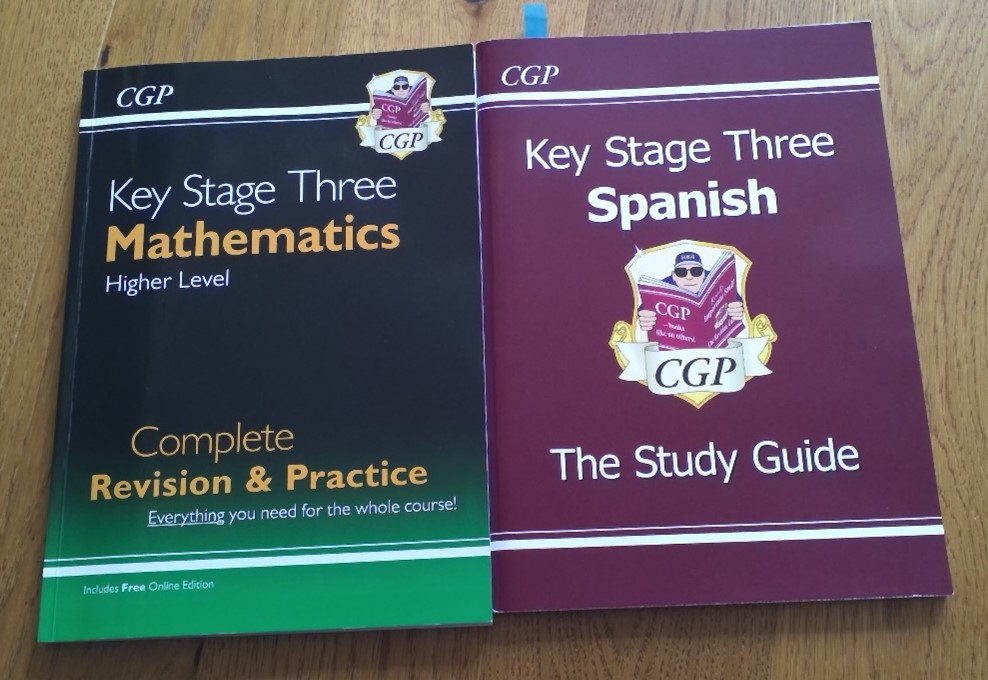
Fortunately, a few days after my conversation with the Head of Maths, I received an email saying that Alice had done really well in her last Maths test and, therefore, she would be placed in the highest sets in both subjects. I was very pleased for her. She was safe for this year but would have to work very hard in Maths to remain in the highest set. Obviously, I set Dad on a mission to find the best maths revision guides and exercise books, so that Alice could have a little extra practice every now and then, and kindly asked him to patiently instil his love for Maths in our daughter (after all he is an engineer, offspring of a Maths teacher). Patiently being the key word here, I can see a Maths tutor coming our way. ?
[ Modified: Monday, 6 June 2022, 2:23 PM ]