
From Elise
Completion requirements
In this response to Astrid Dinneen's letter style blog published here in February 2021, bilingual baby daughter Elise shares her experience of being raised in two languages. Bonus material - find Elise's top resources in her post scriptum.
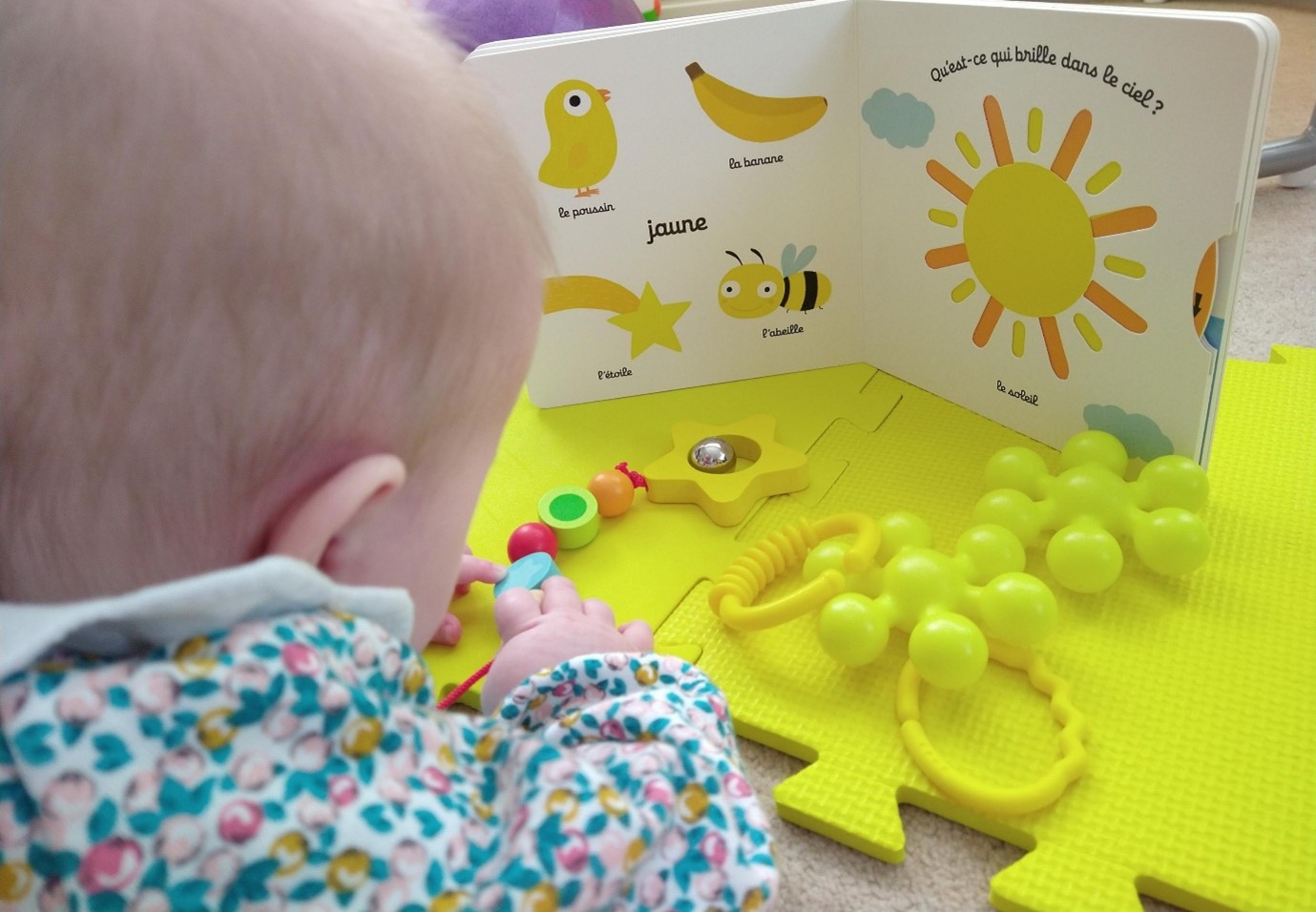
Chère Maman,
I really wanted to write to you in response to your letter to me where you discussed your first steps as a bilingual mum.
I’ve definitely noticed you and Daddy don’t always speak to me and others in the same language. From what I’ve observed Daddy always speaks in English and when you and I are alone you speak to me in French. When Daddy is around you speak in English or sometimes a mixture of both French and English. When we leave the house you continue to speak to me in French but then speak in English with most people we bump into or meet - mind you sometimes it’s hard to make out what language you’re speaking when you wear a mask that covers your mouth. You do speak French with other people than me I’ve noticed. For example, you have regular conversations with Mamie* over WhatsApp. I’ve also heard you speak French with a couple of mums we met through our baby group. As for neighbours, friends and family – they stood in the front garden and waved through the window but I’m sure you both spoke to them in English. I wonder if we’ll ever have French-speaking visitors one day and if they’ll be allowed to come in.
One mum asked how I was coping with both my languages. I suppose it might all sound confusing to some but it’s in fact all normal to me. I’ve never known life in one language only and I see you’re constantly navigating between both French and English so it must be quite normal for you too. Is this why you frowned when you completed this year’s census? ‘What is your main language?’ they asked. ‘This is the language you use most naturally. For example it could be the language you use at home' they explained. The choices were English or Other. You and I don’t have a main singular language, do we? From what I’ve gathered it’s perfectly possible for someone to use more than one language naturally depending on who they speak to, where and for what purpose. If I grow up to become a statistician one day I’ll suggest the survey allows you to check both English and Other.
Unlike the census I sense people around us recognise both our main languages as being equally important. For example in the beginning Daddy didn’t use any French but I’m increasingly noticing his attempts to use words and phrases linked to our routine and he knows a surprisingly wide range of animal names including the word for my seahorse bath toy (hyppocampe). I guess repetition and active listening is helping babies and grownups alike. Some mums also show an interest and say hello to me in French. Mamie is learning English in her spare time and my cousins are learning French at school. Your friend from work also lent us French board books from the resources centre at EMTAS after she read your letter to me. This all makes me feel very good because it shows me that both my languages are highly valued by my important people as well as friendly people. It would mean a lot to me if everyone around me continued to be so supportive because I think it will help me feel confident to be a bilingual baby.
Lately I heard you talk about returning to work and going to nursery. I have a feeling I’ll be the one going to nursery and you’ll be the one going to work, meaning we’ll probably no longer be spending all of our time together. As I write this letter we haven’t yet been allowed to visit the nursery or meet anyone in person because of the virus so I’ve no idea if my bilingual experience will continue when you and I are apart. If everyone at nursery speaks English all the time like I suspect they will, how will this impact my language development in French? Would it mean that English would end up being my ‘main language' after all due to lack of input in French? Do you think perhaps work will let you spend time with me during the week so I don’t have to wait for the evenings and weekends to hear you speak French?
Anyway, I’m off to listen to my bilingual playlist of nursery rhymes you and Daddy have put together for me. I love how all the animals get into mischief no matter what language you sing!
Bisous,
Elise
*Grandma
Astrid carefully considered Elise’s compelling case and
will return to work at the beginning of July 2021 for four days a week.
PS: Elise’s top resources
@minibilingue
on Twitter – Conversations avec my bilingual son -
love these snapshots of a bilingual little boy translanguaging in French and English.
An example: ‘Pousse ta chaise away s’il te plaît !’
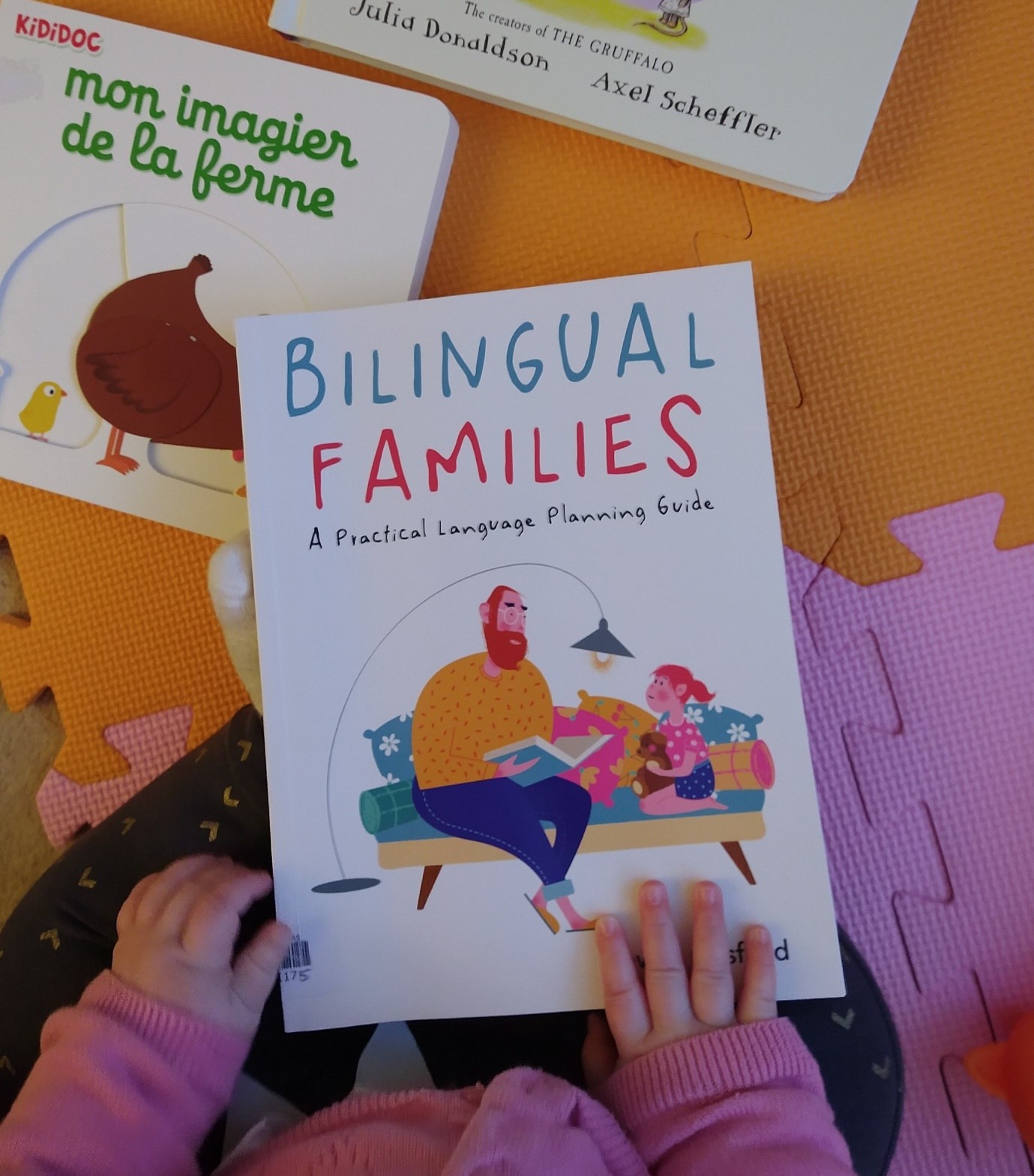
Crisfield, E (2021) Bilingual families, A Practical Language Planning Guide Multilingual Matters, Bristol – a handy book for mums and dads to consider their babies’ language goals and how to achieve them.
KIDIDOC (2011) Mon imagier de la ferme NATHAN, Paris – a book where I learnt French ducks go ‘coin coin' whereas English ducks go ‘quack quack'. What a world!
Donaldson, J & Scheffler, A (2015) Rabbit’s nap Macmillan, London – an epic story I equally enjoy when my Daddy reads it in English and when Maman retells it in French. Ce lapin est fatigué.
Amazon Music – 80 comptines pour enfants et bébés – a playlist which showed me some animal names are conveniently the same in both French and English, just pronounced differently e.g. elephant, crocodile, etc.
Gründ (2019) Mes premières chansons du Nord Éditions
Gründ, Paris – an interactive book of songs from Northern France, a region very
dear to my French family by the sound of things even though they live in the
Pyrénées. Could it be that your sense of identity and belonging is more a
regional than a national notion? Something to explore in another blog if I’m
allowed to hijack it again in the future!
Last modified: Wednesday, 14 June 2023, 11:29 AM