
Site blog
Anyone in the world
By EMTAS Specialist Teacher Advisor Lynne Chinnery
Teaching today sometimes feels like conducting an orchestra while the instruments keep multiplying. One moment you're guiding learning in the classroom, the next you're trying to catch up on all the other tasks you have to do.
The central problem is not a lack of commitment or professionalism, it's time: government surveys of teachers’ working lives (Department for Education, 2023–2025) consistently highlight workload and long working hours as major challenges for teachers in England.
Because we work closely with teachers on a regular basis, we at EMTAS understand that finding the time to read through theories and strategies can be difficult at the end of a long day, no matter how concise we try to make our posts and aides-memoire. With this in mind, we decided to create some bite-sized videos to see if this might be a more accessible way of sharing relevant information and guidance on teaching and supporting learners of EAL.
We are pleased to share that the first set of this new series of bite-sized training videos is now available on the EMTAS Moodle. These videos form part of a wider project to overhaul our free Guidance Library, making it easier for school staff to access information quickly, build skills in manageable steps and revisit key guidance whenever needed.
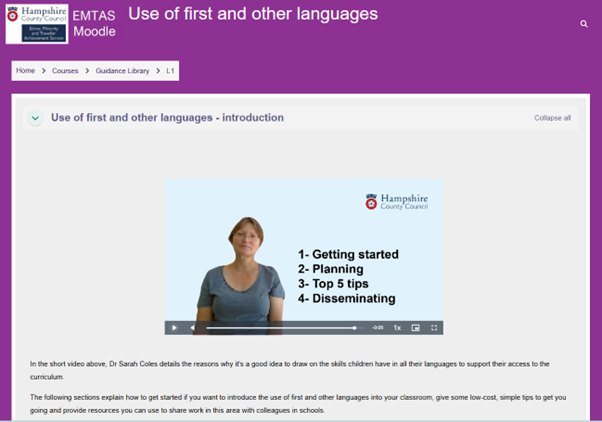
Three main sections of the Guidance Library have already been updated:
· Supporting New Arrivals
· Use of First and Other Languages
· EAL and SEND
The videos cover a range of practical themes designed to support everyday work with pupils and families, and can be accessed at any time. More topics will be added over the coming months.
We hope these quick and accessible resources, none of which lasts more than 5 minutes, make it easier to fit professional learning into a busy day. Videos can be shared during staff briefings, used for in-house CPD, woven into induction for new staff or, watched individually when you've managed to steal a few minutes to yourself.
Explore our new bitesize videos in the Guidance Library. We would love to hear your feedback and any suggestions about areas of support for learners of EAL and Travellers that you would like to explore next. Feel free to email us here: EMTAS@hants.gov.uk.
[ Modified: Monday, 23 March 2026, 9:36 AM ]
Anyone in the world
Designed by Hampshire EMTAS, the EAL Excellence Award is a comprehensive self-evaluation framework that helps schools monitor the impact of their provision for pupils learning English as an additional language (EAL) and address wider aspects of minority ethnic achievement. Covering five key areas - Leadership and Management, Pedagogy and Practice, Data, Assessment and Progress, Teaching and Learning and Parental and Community Engagement - the award originally featured three levels: Bronze, Silver and Gold.
However, as schools continued to use the framework to drive sustained improvement, a need emerged for a fourth level to recognise excellence consistently demonstrated at Gold across multiple validations. This blog explores the journey of the award through Merton Infant School’s own experience, offering insights into what sustained excellence looks like in practice.
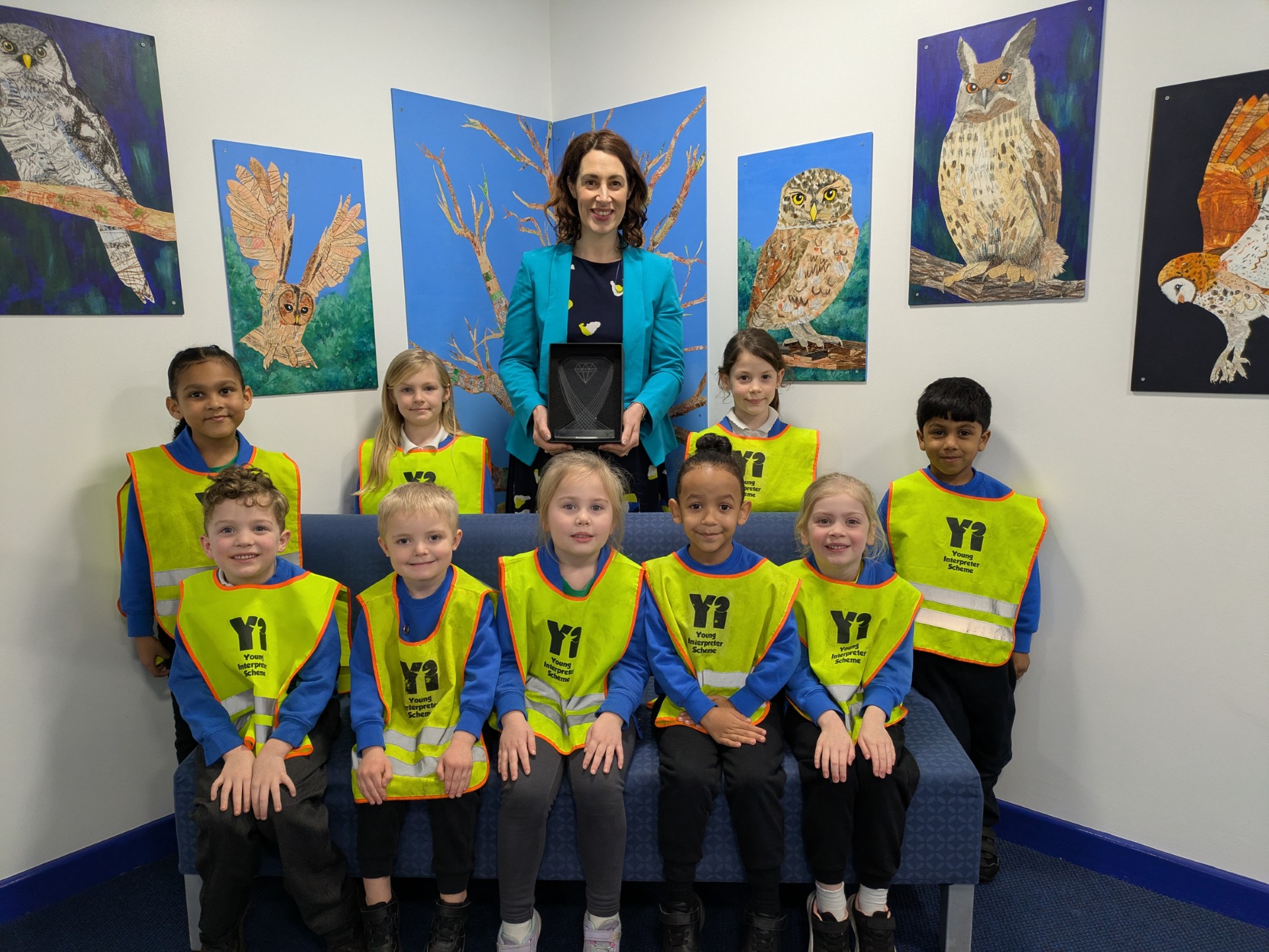
Merton Infant School's EAL lead Mrs Relf and the Young Interpreters celebrate their Diamond Award
How did the Merton Infant School’s EAL journey start?
Merton Infant School’s journey began over a decade ago, when EAL was identified as a whole-school priority due to the increasing number of multilingual children joining the school. From the outset, the school worked closely with EMTAS, seeking advice on meeting the needs of multilingual learners, arranging whole-staff training and introducing the Young Interpreter Scheme.
In 2019, the school undertook its first award validation and achieved Bronze. Their EAL journey continued under the leadership of their EAL Co-ordinator, who ensured staff training remained current and provision was consistently maintained across the school. Acting on guidance from their initial validation, the school progressed to Gold in 2021. When they successfully renewed their Gold award in 2023, Headteacher Mrs James posed an important question: “What’s next for us?”
And so, the Diamond Award was born.
What is the EMTAS Diamond EAL Excellence Award and how do schools achieve it?
Working with Merton and other Hampshire schools that had reached similar milestones in their EAL journeys, EMTAS developed the Diamond level to acknowledge schools that not only maintain Gold standards but also act as centres of expertise, extending their impact into the wider community.
To qualify for Diamond, schools must achieve Gold across two consecutive validations and provide evidence of work in at least one of the following strands:
Community - engaging with families across the wider catchment
Collaboration - working in partnership with other schools
Contribution - supporting EMTAS initiatives and developments.
The Diamond Award was launched in 2024: Working beyond Gold – introducing the new EMTAS Diamond EAL Excellence Award.
How did Merton Infant School achieve Diamond?
In 2025, led by their new EAL Co-ordinator, Mrs Relf , Merton Infant School became the first school in Hampshire to achieve the Diamond EAL Excellence Award. To meet the Diamond criteria, Mrs Relf provided evidence in not one but two strands: Collaboration and Contribution. She mentored EAL Co-ordinators in other schools on their own EAL award journeys and worked with EMTAS to help shape the Diamond Award itself, as well as contributing to new content for the Young Interpreter Scheme.
The school also demonstrated that Gold standards had been consistently maintained since their previous validation. A key focus was consolidating the Leadership and Management strand by further embedding EAL into school policies and aligning it with the school’s core values: Motivation, Excellence, Respect, Teamwork, Opportunities and Never Give Up. The Pedagogy and Practice and Teaching and Learning strands remained strong, with EAL embraced by all staff. In addition, much work had focused on the Parental Engagement strand.
In response to parent voice gathered through EAL coffee events and annual questionnaires, families expressed a desire to play a more active role in sharing their cultures with the school. This led to the creation of Culture Day, with multilingual parents and staff invited to lead activities in school. The response was overwhelmingly positive, strengthening partnerships with families, many of whom have already volunteered to take part again next year.
Merton Infant School has been using a ‘Language of the Half Term’ approach since 2016. When Mrs Relf took on the role of EAL Co-ordinator, she refined and adapted the initiative to strengthen its impact. Children are now recognised as language experts and are invited to lead whole-school assemblies, allowing their peers to hear authentic pronunciation directly from one another. This peer-led approach promotes confidence, respect and inclusion.
Parents are actively involved, with families invited to check the accuracy and pronunciation of multilingual words, helping to ensure cultural and linguistic authenticity. Where possible, parents are also invited to attend launch assemblies to share their first-hand knowledge of the language. These contributions are warmly acknowledged and reinforce the school’s belief that families’ languages and cultures are valued and respected.
To support cognitive load, the amount of language taught has been carefully reduced, reflecting the principle that less is more. Previous languages are regularly revisited when new ones are introduced to support children’s long-term memory. As a result, by the end of the Summer term last year, pupils were able to confidently greet others in six different languages and identify where each language is spoken around the world.
To further reinforce the connection between spoken and written language, children are encouraged to write labels and captions in their own language so they can see their language represented in print. This was also set as a whole-school homework challenge, with many children taking part. Their work was proudly displayed across the school to celebrate linguistic knowledge and family involvement.
Following a suggestion from the EAL governor, key areas of the school environment are also labelled using the Language of the Half Term to enable children to see and engage with the language in meaningful contexts across the school. This inclusive approach is now part of everyday practice and extends into whole-school events such as productions, where children are encouraged to showcase the school’s linguistic diversity. When sharing messages such as Merry Christmas, Happy Diwali or thank you, children speak first in their own language. These small but meaningful moments send a powerful message of respect and belonging to children and families alike.
How did achieving Diamond impact the school as a whole?
Merton’s successful validation coincided with changes to the Ofsted framework, which now includes reference to early-stage learners of English as an additional language (page 20). In a twist of fate, Ofsted inspectors visited Merton Infant School on the very same day as their Diamond validation.
Inspectors were impressed by the school’s strong EAL leadership and parental engagement. During the inspection, Mrs Relf met with the inspector and spoke passionately about the school’s commitment to its multilingual families, from the moment registration forms are completed through to families becoming a valued part of the Merton community. The school’s culture is built on the belief that if provision is right for SEND and EAL families, it is right for everyone. Creating a welcoming environment where children and families feel a strong sense of belonging and are supported to thrive is central to this ethos.
This was evidenced through systematic book monitoring, questionnaires, governor monitoring visits, curriculum monitoring reports and parent feedback. Most powerful of all, however, was the pupil voice. Inspectors commended the children’s passion and maturity as they spoke confidently about their school and their experiences within it.
In their November 2025 report, Ofsted inspectors wrote:
Being a pupil here is like belonging to a big family with relatives all around the world. Whenever pupils join, great care is taken to settle them into school life. New arrivals who speak English as an additional language (EAL) are admirably supported by ‘young interpreters’. The diversity of the school community and the many home languages spoken are widely celebrated.
[...]
An unwavering focus on fairness and opportunity permeates the school. Pupils who speak EAL have an exceptional start to their education. Explicit teaching of speaking and listening skills and what words mean are part of everyday practice from early years upwards. Carefully considered resources and going over learning before or revisiting it after lessons support EAL pupils’ understanding.
What does it mean to have achieved Diamond level?
Achieving Diamond level officially recognises Merton Infant School as a centre of EAL expertise. This status goes beyond internal excellence - it positions the school as a leader in supporting others.
In the Autumn term 2025, EMTAS called upon Mrs James and Mrs Relf to co-deliver an online network meeting focused on the changes to EAL in the new Ofsted framework. Practitioners from across Hampshire working in different phases learned from Merton’s experience of the updated framework and how they successfully embedded EAL into whole-school practice. Colleagues came away feeling inspired by Merton’s work including the ‘Language of the Half Term’ idea, which other schools have since started to adapt for their own settings.
Coming soon, schools embarking on their Young Interpreter journey across the UK (and beyond) will be able to hear from Mrs Relf’s perspective of running the scheme at Merton Infant School in brand new video material uploaded to our Moodle. Practitioners will also hear from Merton’s Young Interpreters themselves!
What’s next for Merton Infant School?
Both Mrs James and Mrs Relf have reflected that achieving the Diamond Award is not an end in itself. EAL remains a core principle woven through everyday practice, one that is embraced by the whole school community. Work is continuing to maintain high standards, keep up with current approaches such as the Talk Rich Teaching Toolkit and support colleagues across the Hampshire EAL network.
Looking ahead, the Merton team is extending its expertise to Merton Pre-school, where a bespoke version of the EAL Excellence Award will shape provision for multilingual children under four years of age. We look forward to hearing how EAL continues to develop in the Merton community.
With thanks to Mrs James, Mrs Relf, staff, parents and children at Merton Infant School.
[ Modified: Thursday, 26 February 2026, 9:41 AM ]
Anyone in the world
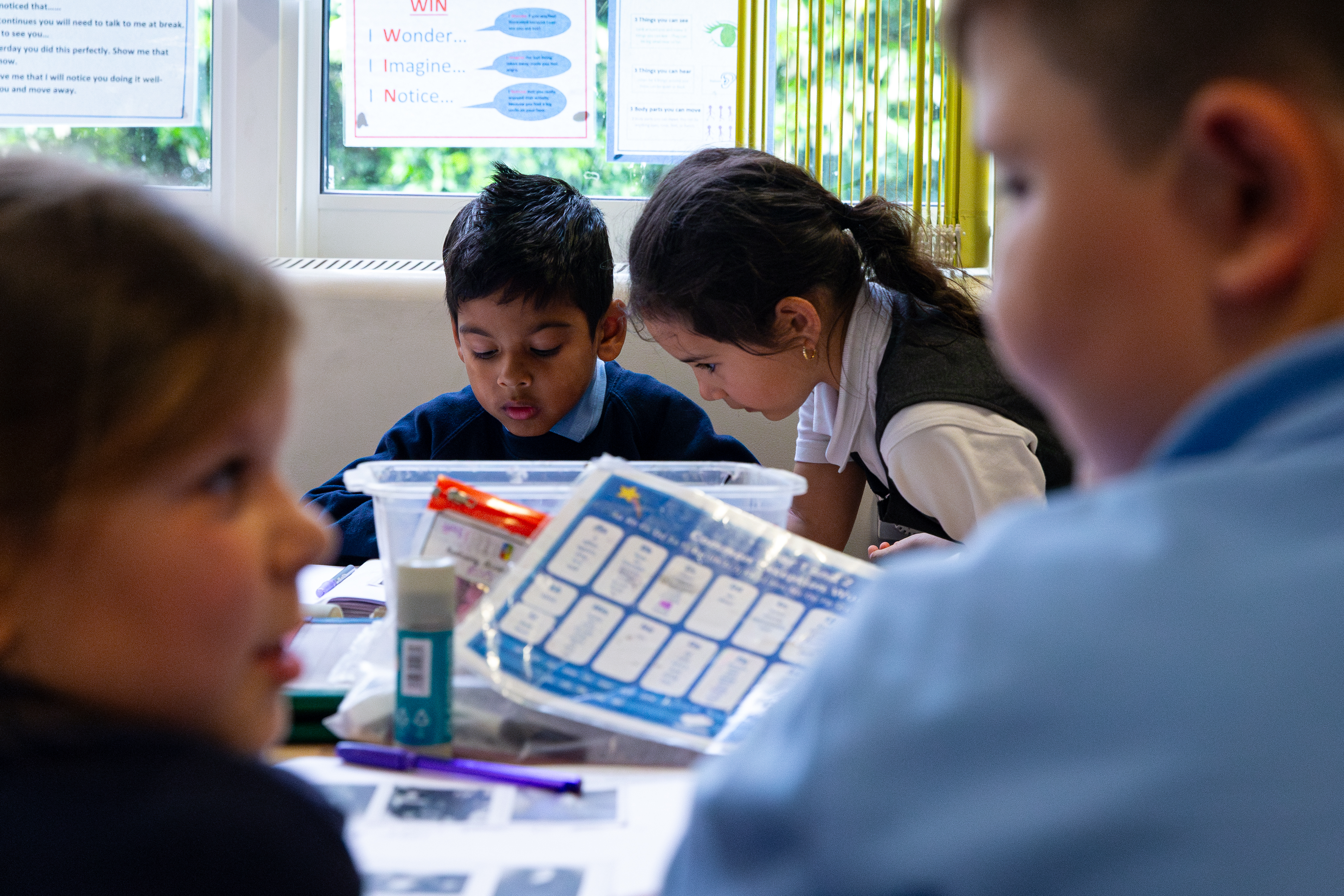
This academic year, several Hampshire schools collaborated with the EMTAS Teacher Team and Prof. Naomi Flynn from the University of Reading to develop the Talk-Rich Teaching Toolkit. This initiative aims to enhance the use of talk-based approaches to improve the engagement of multilingual learners. It is made accessible to staff in primary schools through the toolkit, which comprises self-serve professional learning materials.
The toolkit is grounded in key principles that promote a sense of belonging, encourage talk-rich approaches, support enquiry-led and collaborative learning, and are designed for delivery in small group settings. It also aligns closely with the EMTAS EAL and Traveller Excellence Awards.
As part of the development process, Prof. Flynn conducted interviews with practitioners across Hampshire to understand what features they would value in online professional development materials. These insights directly informed the toolkit’s design. Participating schools then piloted the materials and provided feedback to refine the final product.
The Toolkit was accessed by pilot schools via the EMTAS Moodle and we plan to open it up to other Hampshire schools in the Autumn term 2025. It comprises four main sections:
1) The Toolkit Explained
Outlines the core principles, explores the benefits of oracy and the importance of fostering a sense of school belonging for all learners.
2) Getting Started with the Toolkit
Offers tailored guidance for school leaders, teachers, EAL and GRT leads and teaching assistants.
3) Learning and Teaching with the Toolkit
Presents practical oracy strategies to support learners at various stages of English language acquisition.
4) Further Teaching Resources
Provides additional materials to support implementation.
At the end of the project, schools reported that:
- Multilingual learners grew in confidence to take part in small group conversations using new vocabulary
- Multilingual learners were better able to articulate the questions they needed to ask when they did not understand things
- Teachers found that, in saying less, and working with groups, they became better active listeners
- Teachers appreciated understanding the ‘why’ of implementing oracy, and ‘permission’ to design talk-based activities rather than worrying about written ‘evidence’
- Headteachers appreciated the ways in which Toolkit content could be adapted to local need and matched to school priorities.
If you are interested in knowing more about the detail of this project you can read Prof. Flynn’s longer project report which will be sent to schools in September. Prof. Flynn will also discuss the benefits of an oracy-focused, language-rich curriculum for children for whom English is an Additional Language at the EMTAS conference on October 22nd. You can book your space here.
Watch this space for news of the county-wide rollout!
[ Modified: Wednesday, 25 June 2025, 2:38 PM ]
Anyone in the world
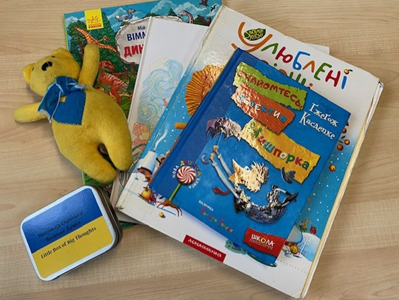
This blog is about a collaboration between Olha, an EMTAS Bilingual ELSA (B-ELSA) and Hannah, one of two school-based ELSAs at Fairview School. Working together, they provided emotional literacy support to Yehor, a child from Ukraine, when he was in Year 2 and again when he was in Year 3. In January 2025, EMTAS Team Leader Sarah Coles visited the school with Olha to talk to Yehor about his experience of that support.
Children from Ukraine in Hampshire schools
Most of Hampshire’s Ukrainian children came to the UK under the ‘Homes for Ukraine’ scheme following Russia’s full-scale invasion of their homeland in February 2022. As we’ve got to know them, we’ve learned they are linguists, mathematicians, musicians, physicists, dancers, artists, gymnasts, chess players and poets. And they are children who’ve been impacted by war, bringing with them experiences the like of which no child should have to endure. Some have had direct experience of the bombing raids, losing people, pets, homes and possessions that way; others have relatives and friends in the worst-affected regions of Ukraine and know about the impacts of the war through the experiences of those people; many continue to live apart from their male relatives who have stayed behind and are involved in the fighting, leading for some to further loss of loved ones as the war drags on. In short, it is not difficult to understand that some of our Ukrainian children may have a need for extra support as they learn to live with grief, separation and losses big and small - these experiences on top of the stress of getting used to living in a new country and a new language. Hence the creation of the B-ELSA role, one way in which Hampshire has responded to the support needs of children from Ukraine.
The B-ELSA role
EMTAS Ukrainian and Russian-speaking Bilingual Assistants have been ELSA-trained by Hampshire Educational Psychology (HEP) and they continue to receive the same supervision from HEP as school-based ELSAs. They are deployed to partner up with school ELSAs to plan and deliver ELSA sessions to children from Ukraine. Because of this collaborative approach, the child can access their ELSA sessions using any or all of their languages. While the B-ELSA moves from school to school throughout the working week, the school ELSA stays put. This ensures that the child has someone they can go to who understands their situation and is there for them all the time; they don’t have to wait for the next B-ELSA visit to get support. What the B-ELSA brings to the sessions is two-fold, both language and culture. Thus the B-ELSA can be a link with home for the child, bridging gaps between home and school in ways in which their school-based colleague cannot.
The school
Fairview School in south-west Hampshire is a one form entry primary school with around 240 children on roll. Most of the children are English-speaking and numbers of learners for whom English is an Additional Language are low at around 5%. The arrival of children from Ukraine has been a learning curve for everyone at Fairview, but people have been open to taking on this challenge and responding in ways that nurture a sense of belonging; the Ukrainian children are seen as bona fide members of this school’s community.
Meet Yehor
After the initial shock of joining the school in Year R, his first experience of being in an all-English environment, Yehor seems to settle in well. He tells me he is the youngest of three children and he talks about his dad, Stefan, and an uncle and aunt; these are the people in his family unit. Yehor likes Minecraft and stories. He plays football and he is partial to a custard cream. He doesn’t seem like a child who’s heard bombs falling on his home city, Kiev, or sat for hours in bomb shelters, waiting for the all-clear.
Yehor’s mother died when he was a baby so Stefan is parenting on his own alongside holding down a full-time job. The older siblings help out, collecting Yehor from school. Yehor says they sometimes call him the baby of the family; he doesn’t much like this.
Stefan is keen that his children maintain their language and culture and so when Yehor gets home, there is Ukrainian school work to be done too. Yehor is proud to be Ukrainian and keen to do well. He says
“If I do everything neatly, my dad will take photograph and send it to my teacher in Ukraine. My Ukrainian teacher says I am the best boy who write in Ukrainian.”
At Fairview, all is well until Year 2. By this time, Yehor is 7 and he’s been here two years. His English is developing well and he is able to access the learning, and is especially keen on maths. However, he begins to demonstrate some behaviours that tell staff he needs a different kind of support. When things don’t go his way, Yehor throws or breaks things, bangs his head on the table or retreats under it. If another child has something he wants, Yehor snatches it. If they get in his way, he roughly pushes them aside.
It is the school’s Head and Deputy who first suggest trying B-ELSA support, having heard about it at a district Head Teachers’ meeting. The school SENDCo agrees; she understands that these new behaviours might be Yehor’s attempt to communicate that he is struggling to navigate the bumpy terrain of living two very different lives, each with its own set of demands and expectations. One he lives at school in English and the other at home in Ukrainian – two different languages, two different cultures; small wonder he’s experiencing difficulties finding his way aged just 7 and with no route map to help him.
The B-ELSA-supported sessions
EMTAS B-ELSA Olha is the person in this story whose job it is to help Yehor build his own bridge so that he can navigate life in two languages and manage the emotional side of that experience. In her B-ELSA role, Olha says she sees herself as a facilitator, letting the school-based ELSA lead the sessions, ready to step in if a child seems hesitant, or if she sees there’s been a misunderstanding. School-based ELSA Hannah’s job is to provide continuity and to be the person who is there for Yehor every day, noticing when he’s coped well with a tricky situation and offering him an encouraging word, and feeding her day-to-day observations of him into session planning.
The two aims of Yehor’s B-ELSA-supported sessions are 1) to work on Yehor’s social skills and 2) to help him understand and name his own emotions – a vital step towards managing them for himself in more positive ways. In line with best practice for this way of working, at the start of each of Olha’s visits, and before Yehor joins them, Hannah briefs Olha on what’s been going on for Yehor between times. At the end, when Yehor’s gone back to class, they spend another few minutes reflecting on how the session went and planning for the next one.
After the second series of sessions in the autumn term of Yehor’s Year 3, the situation is much improved. Yehor is able to use lots of new words to talk about emotions – his own and those of others. He can identify when he is feeling angry and he describes ‘hot chocolate breathing’ as a strategy he’s learned in his B-ELSA-supported sessions and uses to calm himself down.
Yehor says the best part of his B-ELSA supported sessions has been the stories; he’s loved having Olha read to him in Ukrainian at the end. This has for Yehor been an affirmation of his Ukrainian identify, a link with his home language and his home country. It’s also been an opportunity for him to explore a new role, that of interpreter; he tells Hannah in English what the story’s about as they go, and he’s become really good at it, both Hannah and Olha affirm. Thus his sense of his own identity has been boosted and he has learned to accept praise where he’s achieved success, here as a young interpreter.
When asked if he’d recommend B-ELSA-supported sessions to other children from Ukraine, Yehor says “definitely,” adding that the sessions “…helped me a lot…to talk about how I’m feeling.” Now, when asked about school in England, Yehor tells me, “whole entire class is my friends.” He goes on, “I have to do everything correctly, listen, be good, be kind,” and he knows some ways to show those behaviours now, thanks to the sessions he’s had. And so we leave Yehor, a happy, settled, talkative boy who is now able to more fully enjoy the experience of growing up in more than one language.
___________________________________________________
For more information about children here as refugees, for
free resources and for specific information about accessing B-ELSA support for
a child from Ukraine, see the EMTAS Moodle Course: Asylum
Seeker & Refugee Support.
[ Modified: Monday, 10 March 2025, 9:50 AM ]
Anyone in the world
In Diary of an EAL Mum, Eva Molea shares the ups and downs of her experience of bringing up her daughter, Alice, in the UK. In this instalment, Eva attempts to prepare Alice for her Italian Heritage Language GCSE.

I know it is a
cliché but: where does the time go??? It’s been one and a half years since my
last chapter, and I apologise for starving you, my affectionate readers.
So, let’s see what happened since I last told you about my adventures navigating the education system in the UK.
After sending the GCSE options form to the school, we had to wait for what felt like an infinite time before Alice’s choices were confirmed at the end of Year 9: Spanish, History and Dance. And a very happy child in da house!
Year 10 started in the best possible way: fewer subjects that Alice didn’t enjoy, and many of her besties in her classes. What could go wrong?
Well, it turned out that now Alice would have traded her “non-negotiable” Spanish for Drama, had we allowed that, and that Dance was not as simple as it had been presented at the GCSE Options Evening. On top of that, there was the Italian Heritage Language GCSE looming over her, and the even more horrifying prospect of being prepared for it by her very own MAMMA…
Every year, since Year 7, I had asked the school to let Alice take her Italian GCSE in Year 10 and, worn out by my requests, the head of MFL, who had also been Alice’s Spanish teacher in KS3, had agreed to that, being confident in Alice’s skills in Italian and knowing that, given my role as a bilingual assistant for EMTAS, I would be able to prepare her for the exam. Now all I had to do was to have regular weekly sessions with my darling child to get her as ready as she could be.
I decided to leave it for September, so that Alice could find her feet in Year 10, and then started planning our sessions for the quiet Sunday afternoons, when we would have plenty of time to go through all the papers. Or so I thought.
Session 1: Sunday 5th of October 2023, 3 pm, Reading paper, Higher Tier. Puffing like a steam train, Alice read the paper, answered all the questions, and left. Net working time: 40 minutes. Net upset time: the whole afternoon. When I told her that she had done really well with her first practice, my angel looked at me and spoke these words: “Mum, I am a native speaker, I told you it would be easy”. And that was it.
Session 2 was booked only in my diary; the other ones didn’t even make it there. I was completely defeated by my daughter’s silent dismissal. Despite my attempts, she found a whole lot of more interesting things to do rather than practise for her exam: meeting with her friends, reading a book, having to wash her Rapunzel hair, crosswords. Even homework! Really?? Her writing paper gathering dust on her desk, untouched… until a month before the speaking test, when I started to vocalise my anxiety about it.
Eventually, in the attempt to quieten me, the poor thing accepted to sit down and complete at least one listening and one reading past papers, as well as her writing one, and to practise the speaking test with me. And this is when we both learnt something.
Alice learnt that being a native speaker was not sufficient to pass the test with full marks because, despite her fluency in Italian and her very rich vocabulary, she was lacking exam technique. Alice was rather taken aback when, listening to the recording of her speaking test practice, she realised that she didn’t sound as fluent and confident as she thought she was. This epiphany shook her to the point that she willingly made room in her busy schedule for some Italian practice.
The lesson for me was that teenagers don’t want to learn with their parents. Let’s repeat it all together: TEENAGERS DON’T WANT TO LEARN WITH THEIR PARENTS!
It doesn’t matter if their parents are world experts in a given subject, children don’t want to learn with them, nor from them. I don’t know whether this is part of the generational conflict, or not wanting to be confronted with parents’ (high, in our case) expectations, but teenagers learn better with others rather than their parents. I know this might not be true for all children, but it certainly is for mine. And I should have known that because, even though my husband has taught Maths at college and Uni, Alice refuses categorically to be supported by Dad and so we have a Maths tutor.
The other challenge was that the Exam Officer at school asked me to find someone who could act as examiner for the Speaking Test, because the school didn’t have any members of staff who could do it, and obviously I couldn’t either because I was “known” to the student. Now, where we live, Italians are thin on the ground and finding a native speaker wasn’t so easy. Fortunately, one of my husband’s colleagues came to the rescue.
In the end, Alice passed her Italian GCSE with flying colours and got her so wished – read agonised – for 9, although she was very disappointed to have dropped some marks. If only she had gone through the vocabulary list I had printed out for her…
“All’s well that ends well” someone said, but do all families of students with EAL have a good experience with their Heritage Language GCSEs?
At the end of July, at a party, I happened to talk to two mums with EAL, whose girls (the same age as Alice) have also taken their Heritage Language GCSE in Year 10 in a maintained school. Two completely different experiences from ours.
Like Alice, one of these girls has both parents with EAL and first language is spoken at home all the time, therefore she is a very fluent and confident speaker. On the other hand, having lived here most of her life and having been educated in the UK, her reading and writing skills in first language are not as good as her listening and speaking ones. Unfortunately, parents were not provided with guidance or practice papers, and were left to figure it out for themselves.
The other girl has one parent with EAL and an English one, which means that English is the means of communication at home. The mum decided not to even attempt to prepare her daughter for the exam, and found a tutor that would help with that. The girl attended her sessions with the tutor, and worked harder than she would have with her mum (have I already said that teenagers don’t want to learn with their parents?). In this case as well, had it not been for the tutor, parents would have lacked the resources to support their child adequately.
The benefits of taking heritage language GCSE for students with EAL is invaluable, especially if they have not been long in the UK or if they are finding learning a bit challenging. Not only does it break the ice with taking exams in a different education system, but usually its good result boosts their confidence and self-esteem, as well as gives them a sense of pride in their heritage and community and opens doors to future job opportunities. It could also benefit the school’s end of key stage averages.
So, what could schools do to support students with EAL and make the whole experience easier?
A common mistake is to assume that when first language is spoken at home, children with EAL are also literate in their language. This is true in the many cases where parents have found pockets of time and encouraged their children to read and write in first language and fostered relationships with other speakers of said language. But parents’ evaluation can be a bit iffy, and I can unashamedly say that parents of children with EAL are biased when evaluating their children’s first language skills (if our children are not fluent and literate in our first language, we feel like we are not doing our job well, and we are not honouring our heritages, and we are depriving our children of the opportunity of being “perfectly” bilingual, and…and… shame on us!).
Once established that the student is capable, and willing (there is no point in forcing students if they are not ready to commit – Alice didn’t have a choice, though), to take the Heritage Language GCSE, a member of the MFL Department could have an in-person meeting with the student and their parents/carers to explain what the exam entails, its grading for the different tiers, and provide as many past papers as possible (schools are best placed to access the latest resources from the examination boards’ websites).
Another thing to consider is that KS4 students have very busy schedules, and sometimes they can fall behind with additional work, so having an adult in school – a member of the MFL Department, who could also help with teaching exam technique, their tutor, their head of year – that checks in with them regularly and monitors that they are completing their practice papers could really help them stay on track. Liaising with the parents/carers would also be a great way to remind them to use first language at home all the time, especially in the run up to the exams, as well as allowing the students to do some practice papers in school, perhaps during tutor time, or looking for opportunities to group together students that speak the same language so that they can practise their speaking skills.
This year GCSE season is fast approaching, my usually delightful daughter has already turned into a prickly porcupine, and I have studied the exams timetable to figure out when it will all be over and serenity will reign over our house again. At the moment, it seems a very distant fantasy.
All I can say
for now is: one down, ten to go!
Further information
More information about Heritage Language GCSEs and EMTAS support packages can be found on our website. The deadline for requests is the 1st of March.
[ Modified: Tuesday, 25 February 2025, 12:03 PM ]
Anyone in the world
By Astrid Dinneen

The Young Interpreter Scheme has been running with Hampshire EMTAS at the helm for over 15 years. Many of our readers will have experience of running the scheme themselves. In a nutshell, it offers training for learners aged 5-16 to develop the skills needed to help new to English learners navigate their new school environment. Trained Young Interpreters help newly arrived pupils feel welcome and settled through their languages, body language, facial expressions and strategies such as pointing, drawing pictures, demonstrating routines or simply playing a game.
Until recently, little was known about the impact of the scheme on the Young Interpreters themselves. However, a report published this year by Dr Debra Page sheds some light on its positive effect on the development of empathy, intercultural competence, and metalinguistic awareness among primary school children, with these effects emerging gradually over time. Dr Page comments that ‘this indicates that the Young Interpreter Scheme is a valuable tool for supporting EAL learners and fostering broader educational and social competencies among students’. She concludes that
[…] the Young Interpreter Scheme is a valuable framework for supporting EAL learners and promoting essential social and cognitive skills among primary school children. The evidence suggests that with careful implementation and ongoing support, the YIS can significantly contribute to creating a more inclusive and supportive learning environment.
To read the full report: Young Interpreters: Report for Hampshire EMTAS on the Impact of the Young Interpreter Scheme (Page, 2024).
To find out more about the Young Interpreter Scheme: visit our website and join our free webinar on November 26th 2024 (book your space with Lizzie Jenner – lizzie.jenner@hants.gov.uk).
[ Modified: Thursday, 14 November 2024, 11:04 AM ]
Anyone in the world
By former EMTAS Specialist Teacher Advisor Jess Richards
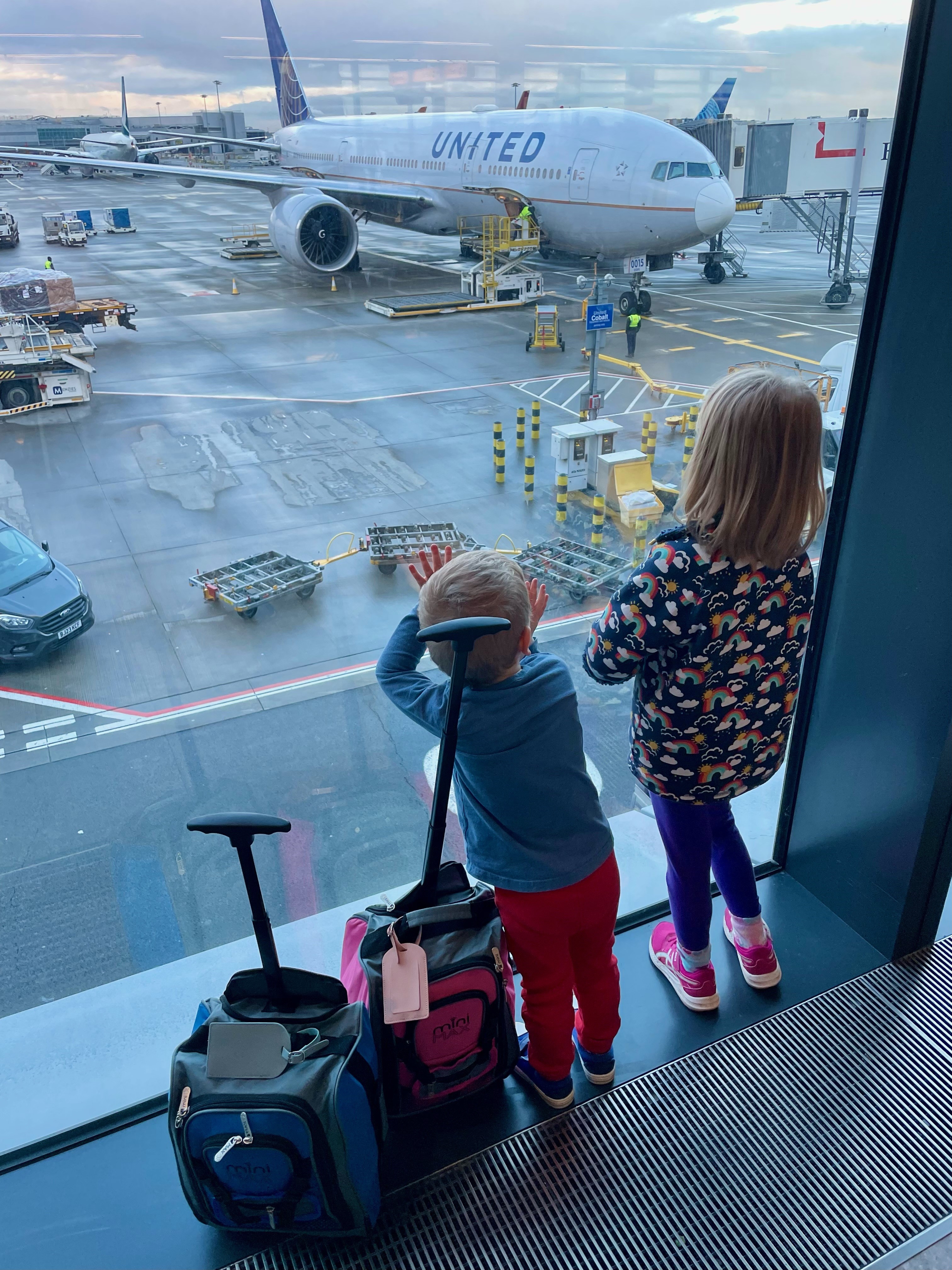
It’s one thing to be an advisor helping other people welcome new arrivals. It’s quite another when your family become the new arrivals themselves.
At the start of 2024 my husband and I relocated to Texas with our two children. To be absolutely clear, we are in a privileged position. We weren’t escaping conflict or instability, we had the support of a big corporate employer and – most significantly of all – we didn’t have a language barrier to overcome. Nonetheless, moving several thousand miles with kids has been a real education for this so-called ‘specialist’.
I am pleased to say I have seen a lot of excellent practice. My daughter arrived in Kindergarten in the middle of the school year and was literally welcomed with open arms. Teachers stood outside on her first day with signs like an airport arrivals lounge to make sure she knew where to go. They were visibly excited to meet her and make her part of the school community. We received lots of information about aspects that were completely new to us: riding the bus or joining the car lines for school pick up, buying school supplies. Despite the frequency of accepting new students from overseas it hadn’t dampened their enthusiasm. Not once did our arrival feel like an added burden in their busy schedules. School spirit and belonging wasn’t just theoretical; they were living it out every day.
There’s an infographic sometimes used in EMTAS training with concentric circles showing the concerns of newly arrived students. The outside circle is the least complex, applying to any child at a new school without the added burdens of language acquisition or forced displacement. This is the circle where my family sits. Will I make friends? Will I know where to find the toilet? Will they have food I like? These are easy to solve but often overlooked. I have a new appreciation for them now. When you’re operating in a totally different education system, the little things really matter.
What did my children find most challenging? Ironically, my six year-old daughter says it’s the language. She’s a first language English speaker in a first language English setting and yet she’s still navigating linguistic differences every day. We tried to prepare her for the obvious: restrooms, recess, trash. Others she learned by inference or plain old misunderstanding: band aids, tennis shoes, braids. Luckily she isn’t alone in a big expat community and she’s socially confident. A shy child might have found it quite tough.
The linguistic challenges for my three year-old son have been much more stark. Still early in his own English language journey, he had less context to help him piece things together. We talked about the ‘bathroom’ and the ‘restroom’ and his ‘pants’ but didn’t realise how frequently he would be asked, ‘do you need to go potty?’ Once he worked out it was ‘potty’ not ‘party’ (accents are tricky when you’re three!) he still thought it wasn’t for ’big boys’ like him. He assured them in no uncertain terms that he uses the toilet.
Our move has also taught me a lot about an aspect we sometimes overlook: cultural difference. I felt I had lived in America for nearly 40 years through my TV screen. I didn’t expect to feel so…different. Outside of my home country I don’t always know the code. What are suitable topics of conversation? Luckily we have Texan friends who will help us out and fortunately it’s usually fairly low-stakes. My daughter’s school explained that we needed a home-made post box in time for 14th February. Nonethless I didn’t realise every child in my son’s preschool class required a treat as well as a Valentine’s card. Next year we will try not to come off as the stingy Brits.
In the grand scheme of things these are minor issues. However, they serve to underline the scale of the challenge for other children who might be newly contending with language, literacy and sometimes the imprint of trauma. It’s a steep hill to climb. The very best thing we can offer in schools is empathy.
[ Modified: Monday, 14 October 2024, 3:51 PM ]
Anyone in the world
By the Hampshire EMTAS Specialist Teacher Advisors with the support of the wider EMTAS team

In this first blog of the academic year the EMTAS team congratulate students on their fantastic GCSE results, share their new programme of network meetings and update readers on their work with the University of Reading. We conclude this blog with some introductions.
Heritage Language GCSEs
2023-24 was a bumper year for EMTAS with the Heritage Language GCSEs. 200 requests were made by 11 schools and 187 students were supported by EMTAS Bilingual Assistants in the speaking exam, whilst 70 students had support for reading and writing too. It was great to see so many schools celebrating multilingualism by offering Heritage Language GCSEs to their students. Polish was the most requested language with the largest number of candidates sitting the exam; our Polish Bilingual Assistants supported 38 students at one school alone. Results are in and we are pleased to report that 66% of the students supported by EMTAS Bilingual Assistants achieved the top Grade, 9, with a further 19% achieving an 8.
EMTAS network meetings
Starting this term, we are tailoring our online network meetings to best meet the needs of our schools. Before the summer, schools were sent a link to a form to complete, allowing us to schedule network meetings on the most popular topics and on the most popular days/times as advised by you. Our programme of network meetings for this term is now live on our website. We are starting on September 17th with a session focussing on the needs of learners who are new to English. Later this term you will have the opportunity to join sessions focussing on the needs of more advanced learners of EAL, a meeting exploring how to use first language as a tool for learning in the classroom and a session considering how to track progress in acquisition of English for learners of EAL. We look forward to seeing you online – book a network meeting now.
University of Reading with EMTAS: research project update
Our joint research project with the University of Reading continues into this academic year. Naomi Flynn held interviews with the EAL or Traveller co-ordinators and Headteachers of fourteen schools from across the county before the summer. These were very helpful in establishing what schools currently do to support their multilingual, Traveller and Showmen pupils, what they find challenging, and what they would like to see in the new oracy-related training materials that will emerge from this project. Alongside the interviews, Naomi is meeting regularly with the EMTAS teacher team to establish what the principles driving the new materials will be and how we might ensure their accessibility and usefulness to schools. Early this term we will send out invitations for schools to take part in trialling the new resources for us from November 24 – February 25. We’d like to thank those schools who have already taken part; your input has been invaluable. If you have not yet taken part in an interview, and/or want to know more about the project, there is still time (contact Naomi on n.flynn@reading.ac.uk). Alternatively, do please send us your thoughts at this questionnaire link.
Report on the impact of the Young Interpreter Scheme
Supporters of the Young Interpreter Scheme and avid readers of the blog will be familiar with research carried out by Debra Page on the Young Interpreter Scheme as part of her PhD. We are delighted that Debra – now Dr Page – has completed her PhD and shared her findings with us. She concludes that
“…the Young Interpreter Scheme is a valuable framework for supporting EAL learners and promoting essential social and cognitive skills among primary school children. The evidence suggests that with careful implementation and ongoing support, the YIS can significantly contribute to creating a more inclusive and supportive learning environment.”
Read Debra’s report now…
EMTAS staffing
Just before the summer break, the EMTAS Bilingual Assistant team welcomed Nyonde, who works with Fiona Calder as Achievement Project Officer for children of black and ethnic minority heritage. Lubna added Urdu to the languages we can cover, and Katya joined our Ukrainian team. Joining EMTAS in September, Anu brings Malayalam and Tamil to our offer to schools and Thibaut joins our teacher team; he’ll be covering schools in the New Forest. All look forward to working with you this academic year.
Ethnic Minority and Traveller Achievement Service | Hampshire County Council (hants.gov.uk)
[ Modified: Tuesday, 17 September 2024, 10:14 AM ]
Anyone in the world
By the Hampshire EMTAS Specialist Teacher Advisors with the support of the wider EMTAS team

It has been another busy year for Hampshire EMTAS. In this article we examine this academic year’s data and share interesting trends - these trends are reflected in our staffing update as well as the BCAP and B-ELSA role sections. We reflect on our work with Separated Minors (aka Unaccompanied Asylum-Seeking Children) and share highlights of our support to pupils from Traveller and Showmen heritages. We celebrate the end of the GCSEs, catch up with our new study skills programme and reveal the schools who have successfully achieved their EAL/Traveller Excellence Award. Next, there is an update on our research project with the University of Reading. You will see we also ask for your input to help us shape next term’s programme of network meetings. We finish with a note from Team Leader Dr Sarah Coles.
This academic year in data
Our referrals this year total a little over 1,000. The most referred language this time has been Malayalam, reflecting families coming new to Hampshire from Southern India. Also featuring in our data are various African languages; Isizulu, Ndebele, Twi, Igbo, Swahili, Somali, Hausa, Mandinka and Afrikaans. For each of these, we've had relatively low numbers referred. However, when combined they’ve added up to enough for us to have needed to increase our staffing for this diverse group of children. Although not at the same rate as in recent years, we’ve also continued to receive lots of referrals for children here with their families as refugees. They represent speakers of an array of languages and they originate from countries across the globe – Afghanistan, Iran, Iraq, Somalia, Pakistan and Ukraine to name a few. So it's been all hands to the pump as EMTAS staff have worked to profile all the children, and to support them in the way that best matches the needs of the individual.
EMTAS staffing update
New to the EMTAS Bilingual Assistant team this year we have
welcomed Nyonde, who works with Fiona C to support black children on roll in
our schools. Lubna adds Urdu to the languages we can cover, Katya joins our
Ukrainian team this summer term and in September, Anu brings Malayalam and
Tamil to our offer to schools. Replacing Jess, who left for a new life in
America at Christmas, Michelle joined the teacher team in the summer term and
has been building relationships with staff in schools in Fareham and Gosport,
her new patch, ever since. Thibaut will join our teacher team in September;
he’ll be covering schools in the New Forest.
We say farewell to Kevin, who joined us just for 1 academic year to help cover our Cantonese referrals. Kevin goes on to a support role in a school. Sudhir is leaving us too. He’s been a member of the BA team for 16 years, and is well-known in schools with Nepali children on roll. Sudhir is off to train to be a maths teacher and we wish him every success in that endeavour. Finally, we congratulate Team Leader Dr Sarah Coles on successfully completing her PhD.
BCAP
This year we are delighted to welcome a new Achievement Project
Officer for children of black and ethnic minority heritage. The team consists
of two people who are covering the whole county mainly supporting children of
colour. We have had a significant increase in the number of referrals from
schools for children who speak African languages, the main ones appearing on
referrals being Shona, Yoruba, Ndebele and Twi. Our Achievement Project Officers
can now offer Cultural Awareness training to schools in addition to their
support for these pupils.
Bilingual ELSA (B-ELSA)
Using funding for children from Ukraine, EMTAS and HIEP have
worked together to develop a new role, the Bilingual ELSA. Our Bilingual ELSAs
receive the same training and supervision with an Educational Psychologist as a
school-based ELSA. The Bilingual ELSAs work together with school-based ELSAs to
plan, deliver and review ELSA sessions tailored to children from Ukraine. In
this way, school-based ELSAs stay fully informed about the Ukrainian children’s
emotional well-being whilst the children will always have access to someone in
school who understands how they are feeling and the issues they are dealing
with like the loss of their home in Ukraine, bereavement, separation from
family members and friends, loss of power and control over key aspects of their
daily lives and uncertainty.
Bilingual ELSAs offer children a real connection to home as they give an opportunity to speak in first language as well as English. Our B-ELSA team share resources with school-based ELSAs and bring in other materials too, eg from Bear us in Mind. This charity provides, amongst other things, teddy bears in the colours of the Ukrainian flag. A bear attends each B-ELSA session, offering children a tangible anchor of emotional comfort.
Separated Children
You will have noticed we now refer to Unaccompanied Asylum-Seeking Children (UASC) as ‘separated children’, as this better describes the ongoing experience of separation they face. According to government statistics there were 3,285 applications from separated children in the year ending March 2024, 5% of the total asylum applications to the UK.
The separated children we have met at EMTAS have mostly come from Afghanistan, Iran, Iraq and Sudan and the most common languages have been Pashto, Arabic and Kurdish Sorani. Some of these children have been attending schools in Hampshire and the Isle of Wight, but we have also been continuing our work with the Virtual School to provide profiling assessments for separated children under Hampshire who have been placed in other counties. We have had 27 separated children referred to EMTAS since September 2023.
These children have to learn to deal with a new language, a new school system, a new home and a new culture, without family and friends to support them. Some cope with this change incredibly well, whilst others feel out of place and find the lessons overwhelming and the restrictions of school life in the UK very difficult to adjust to. If one of these brave young people arrives at your school, please do get in contact with EMTAS as soon as possible so that we can work together to support them as they learn to adjust to their new life. For more information and guidance on separated children, see our Moodle folder Asylum Seekers and Refugees. Try this quiz too, to see how much you really know about refugees: Refugee Action quiz (refugee-action.org.uk).
Traveller & Showmen work
As usual the Traveller team have been busy throughout the year supporting all our schools, families and children. Julie and Steve, our two Traveller Support Workers (TSWs), have been in schools visiting all our primary aged children whilst Claire, our Traveller Team lead, has been supporting students in secondary schools via our Traveller & Showmen clinics. This is no mean feat when you consider that we are currently supporting 325 children. During this academic year Helen, our Traveller Team Teacher, has made 28 school applications to help Traveller & Showmen pupils to get places in Hampshire schools.
As well as continuing with our Traveller & Showmen book and gardening clubs, we have also been running an attendance project. Claire and Helen have been working with four schools and their families to support increased attendance. Next year we are hoping to extend the project to include more schools.
To celebrate Gypsy, Roma and Traveller History Month we were very privileged to be able to provide two live, online story-telling sessions with author Richard O’Neill. We were joined by lots of our schools and hundreds of children were able to enjoy Richard’s wonderful stories. We also held a poetry competition around the month’s official theme ‘What does family mean to you?’. We encouraged our pupils to write a poem entitled ‘What family means to me’. We have had some fantastic entries and Claire and Helen will be getting together soon to decide who will win a signed Richard O’Neill book.
Heritage Language GCSEs
This has been a bumper year for EMTAS with the Heritage Language GCSEs. 200 applications were made by 11 schools and 187 students were supported by EMTAS Bilingual Assistants in the speaking exam, whilst 70 students had support for reading and writing too. It is great to see so many schools celebrating multilingualism by offering Heritage Language GCSEs to their students. Polish was the most requested language with the largest number of candidates sitting the exam; our Polish Bilingual Assistants supported 38 students at one school alone. All our Bilingual Assistants supporting Heritage Language GCSEs have been racing from school to school to carry out the speaking exams within the assessment window. We are looking forward to results day on 22 August when we hope the students will be celebrating their achievements. Our staff are looking forward to hearing how well their students did too.
Study Skills Programme
This academic year our Bilingual Assistants have been providing support to pupils through the Study Skills Programme, a new and innovative form of support for pupils in Years 5 and 6 and KS3/4 who are literate in their first language. The aims of the programme are to help pupils explore how they feel about their learning and their subjects and to equip them with different tools and strategies they can apply in their lessons and home learning. For example, pupils have been learning how to use Google Lens to create a glossary, had a go at using Immersive Reader to access a text and much more. After an initial pilot at the start of the academic year the programme is now part and parcel of our ways of working with pupils.
Feedback from the programme has been overwhelmingly positive. One Bilingual Assistant fed back that throughout the sessions, her pupil displayed a strong interest in the programme and seemed determined to learn about the tools and skills introduced to support her learning. Another pupil said that she found Microsoft Translator and Immersive Reader especially useful for her revision practice. She was already familiar with some of the tools but commented that it was useful for her to explore these further and discover new features that she had not been aware of.
It is hoped that the impact of the programme will be apparent in class long after the pupils have completed the programme. In order to maximise impact and help pupils continue to develop independence in the classroom, the use of translation tools will need to be woven through teacher planning. To enable them to do this effectively, there will be opportunities for colleagues to learn more about the technology built into the Study Skills Programme in the new academic year.
EAL and Traveller Excellence Award celebrations
This academic year, we have once again celebrated the hard work of many Hampshire schools, and others further afield, who have achieved an EAL or Traveller Excellence Award.
Achieving the bronze level Traveller Excellence Award this year was Micheldever Primary school. Silver was awarded to Robert May’s School. We keep everything crossed for Greenfields Junior school, Wellow Primary school and The Hurst for their upcoming validations at bronze level.
Achieving the bronze level EAL Excellence Award were the City of Leicester College and New Milton Junior school. Silver level was awarded to Purbrook Infant school, St Peter’s Junior school, St Michael’s Infant school and Fleet Infants. Achieving the gold level award were Swanmore College, Alderwood Senior school, Alderwood Infants and Junior school, Elvetham Heath Primary school, The Riccher Federation Nursery Schools, The Wavell and Al Rabeeh Academy. Congratulations to all these schools and settings on this fantastic achievement!
This year we have introduced two new elements within our EAL awards. We have developed an Early Years Foundation Stage EAL Excellence award which we have already been successfully using to validate some nurseries and pre-schools during its pilot phase. In addition to this, we have now included a Diamond level within our EAL award. For schools that have successfully been validated at gold level twice, they can begin working towards their Diamond level. More information regarding this exciting addition can be found here: Working beyond Gold – introducing the new EMTAS Diamond EAL Excellence Award (hants.gov.uk).
University of Reading and EMTAS research project
Our joint research project with the University of Reading has got off to a great start. Naomi Flynn has held interviews with the EAL or GRT co-ordinators and Headteachers of fourteen schools from across the county. These have been very helpful in establishing what schools currently do to support their multilingual, Traveller and Showmen pupils, what they find challenging, and what they would like to see in the new oracy-related training materials that will emerge from this project. Alongside the interviews, Naomi has been meeting regularly with the EMTAS teacher team to establish what the principles driving the new materials will be and how we might ensure their accessibility and usefulness to schools. Early next term we will send out invitations for schools to take part in trialling the new resources for us from November 24 – February 25. We’d like to thank those schools who have already taken part; your input has been invaluable. If you have not yet taken part in an interview, and/or want to know more about the project, there is still time (contact Naomi on n.flynn@reading.ac.uk). Alternatively, do please send us your thoughts at this questionnaire link.
EMTAS network meetings
Starting this autumn term, we will be tailoring our network meetings to further meet the needs of our schools. Each school should have received a link to a form to complete, allowing us to provide our network meetings on the most popular topics and on the most popular days/times as advised by you, our colleagues. Once we have received the feedback from schools, we will be sending out information regarding the upcoming network meetings, allowing schools to book onto those of interest. Should any Hampshire schools not have received this form to complete, the following link can be used: https://forms.office.com/e/14c2MizvEp.
Finally, a conclusion by Team Leader Sarah Coles
2023-24 has whizzed by and as you can see, we’ve been kept very busy throughout, navigating all the changes and challenges that have come our way since September. Working in this field brings new things to learn all the time, even when you’ve been around as long as I have (24 years!). I look forward to finding out what 2024-25 has in store for us. But first, and like most of us at EMTAS and in schools too I’m sure, I look forward to the summer holidays.
[ Modified: Tuesday, 16 July 2024, 10:40 AM ]
Anyone in the world

By the Hampshire EMTAS Teacher Team
Hampshire EMTAS is working with Merton Infant School, Cranbourne School and St Swithun Wells Primary School to develop an additional level for the EAL Excellence Award (EXA). The new level will acknowledge the achievement of schools maintaining Gold standards while acting as EAL centres of expertise and reaching out to the community. Schools achieving Diamond level will be recognised by a trophy and certificate and celebrated on the EMTAS website/Moodle.
To qualify for Diamond, schools will need to have been previously
validated at Gold. They must also demonstrate they are maintaining their Gold
level practice for their subsequent validation. In addition to this they will
show further evidence of work within 1 of the following 3 strands:
- Community
(working with families in wider catchment)
- Collaboration
(working with other schools)
- Contribution
(working with EMTAS).
Schools will have flexibility in choosing their area of
expertise and how they may like to evidence this. They may also collaborate on
a particular project.
Below are examples of pieces of work which may lend themselves to each strand. Individual schools may come up with their own ideas for projects which are particularly relevant for their setting and the pupils and families in their local area. Colleagues should discuss their Diamond project ideas with their EMTAS Teacher Advisor first eg to avoid duplication of a resource.

As with other EXA levels, schools’ Diamond award will lapse after 2 years. To maintain their Diamond level, schools will need to evidence that they have maintained their Gold. This revalidation process will be flexible and driven by individual schools’ action plans. Schools will also need to show they have continued to contribute within the above strands.
Case studies
School A successfully achieves Gold in December 2022. In March 2024 they revalidate at Gold. In addition to this they demonstrate their work mentoring another school and their contribution to a new EMTAS resource. This school qualifies for a Diamond award.
School B submits evidence for their EXA in October 2023.
This is their first ever submission. They are validated at Gold. At their
validation they discuss their contribution to a network meeting in February
2021. This school does not yet qualify for a Diamond Award because they have
only just recently achieved Gold and their Diamond evidence is out of date. To
achieve Diamond the school needs to revalidate at Gold with current/varied
evidence of work at Diamond standard.
By introducing the Diamond Award, we hope schools which
have already obtained Gold will be inspired to use their experience and
expertise in EAL to support others. We look forward to supporting schools in
their projects and finding out their impact on the EAL community.
[ Modified: Tuesday, 21 May 2024, 11:42 AM ]